 Drapers Fashion retail industry news, trends and analysis

Dancing Leopard
Launched in 1999, British womenswear brand Dancing Leopard became known for its bold colours and even bolder prints, inspired by the summer party island of Ibiza. Its fun dresses, jumpsuits and skirts were sold on its website and a flagship store in Ibiza, as well as online via Next, Very and SilkFred.
However, the brand was hit by cashflow issues after a costly restructuring of its logistics operations and fell into administration in early 2025. It was acquired by Seb Mills, who came on board as owner and chairman. Mills is the former managing director of boxing brand Boxraw. He also spent eight years at activewear giant Gymshark, driving its online growth as the business’s tech and digital director.
Dancing Leopard has now partnered with global online retailer Shein’s Xcelerator programme to power a new chapter of international growth. The partnership allows the business to plug into Shein’s suite of direct-to-consumer (DTC) services, giving it access to Shein’s product fulfilment systems and global sales platform. Dancing Leopard will also shift to a new production model by plugging into Shein’s on-demand production services, which will allow the brand to push creativity while avoiding high minimum order quantities (MOQs), long lead times and the risk of seasonally driven guesswork.
“Our on-demand model takes a test-and-learn approach to production,” explains Cui He, spokesperson for Shein Xcelerator. “We launch new styles in very small batches – often just 100 to 200 pieces – and use real-time insights to see how customers respond.”
If demand is strong, Shein can quickly replenish and scale up. If not, it will sell through and move on.
Advertisement
“This is a complete reversal of traditional, supply-driven fashion, where brands make big seasonal bets months in advance. By producing only what customers actually want, we reduce unsold inventory and respond to trends with much greater precision and agility.”
Drapers meets Mills to find out more about how this on-demand approach will fuel Dancing Leopard’s future success.

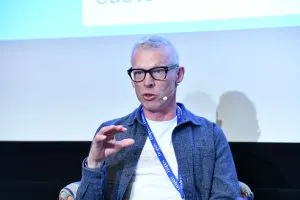
Seb Mills
What prompted Dancing Leopard’s change to on-demand production?
We reached a point where traditional production cycles were limiting our agility, tying up too much capital in inventory and slowing our ability to react to customer demand. We also saw increasing volatility in sell-through and trend velocity – the cost of being wrong was simply too high.
In this space, test and learning is everything. We want to be able to test what our audience likes and double down. On-demand production allows us to do that efficiently. It means we can bring more products to market, be smarter with our spend and compete with much bigger brands, even as a smaller business.
Advertisement
What were the main challenges Dancing Leopard faced with traditional methods?
Forecasting demand nine to 12 months ahead in a fast-moving ecommerce environment was guesswork at best. We carried the financial and environmental burden of excess stock, markdowns and warehousing costs.
As a print-based brand, we’ve always had to be brave with design, which makes demand planning even harder. Sometimes we’d get it really right and not order enough, but when a print didn’t land, we’d be left with large quantities of stock because of high MOQs.
We also couldn’t easily top up bestsellers, as factories often required bigger follow-on orders, which slowed us down.
How did you assess whether on-demand aligned with your brand values and long-term goals?
Dancing Leopard has always been about bold, expressive design, not mass production. On-demand fits perfectly with that creative freedom. Producing only what sells can drastically reduce overstock, while supporting Dancing Leopard’s long-term goal of building a lean and profitable business.
Over time this approach will help us learn what really connects with our audience much faster than a traditional route ever could. The biggest advantage is agility: being able to test, learn and scale with confidence.

Dancing Leopard
How has the move to on-demand manufacturing impacted lead times, workflow or forecasting?
The move has completely changed our product lifecycle from design to delivery. Lead times have shortened dramatically – we can now go from concept to customer in weeks, not months. Our teams work in shorter, iterative sprints rather than rigid seasonal drops and forecasting is now based on real-time feedback rather than speculation.
Why did you choose to partner with the Shein Xcelerator programme as part of this switch?
Shein’s infrastructure is unmatched when it comes to on-demand production and technology. We wanted a partner that had already successfully operationalised the model globally.
Shein Xcelerator provides targeted and tailored services from next-generation, on-demand production to digital sampling and live consumer insights. It was a strategic decision to pair our creative strength with its supply chain services and tech capability.
How does the Shein partnership fit into Dancing Leopard’s broader growth strategy?
Dancing Leopard has always been a UK brand with Ibiza DNA, but we’ve historically struggled to distribute internationally. This partnership changes that. It gives us the ability to serve customers globally with competitive delivery and returns.
It allows us to keep operations lean, scale faster and focus on what we do best – creating beautiful products and building our brand.
What advice would you give other brands considering a move to on-demand or partnering with Shein?
On-demand is the way forward, and I honestly can’t think of many downsides. Be clear on your product DNA and understand where speed and flexibility can enhance it. Partnering with Shein has been a pleasure. The team is energetic, knowledgeable and has an unrivalled understanding of the fashion market through their vast customer insights. I’ve visited their operations in China several times and can say first hand they are world class, and moving at a pace of innovation that’s unmatched. My advice: focus on your product and brand, and let a partner like Shein take care of the logistics and operational complexity.
The Shein Xcelerator programme launched in the UK in September and is open to applications from new brands and existing businesses. It aims to help your business grow. To find out more about the programme and how on-demand production can help power growth, contact: xcelerator@sheingroup.com


Have your say
or a new account to join the discussion.